The Summer-Fall 2012 issue of Swan View's News examines how we are navigating collaboration, bullying and vandalism on the Flathead National Forest!
The table of contents is shown below; click here for the entire newsletter in PDF.
URGENT UPDATE: Montana Department of Fish, Wildlife and Parks denied our petition to end the trapping of imperiled wolverine in Montana (see page 4 of the newsletter), so we've been left with no choice but to file a lawsuit against MDFWP! Click here to read the update.
Please make a donation today to help cover the costs of the three lawsuits discussed in our newsletter; all needed to protect the habitat of increasingly rare forest carnivores like pine marten, fisher, lynx, and wolverine!
Do it today and Cinnabar Foundation will match your donation!
And don't forget our annual meeting on November 11 (see page 6 of the newsletter).

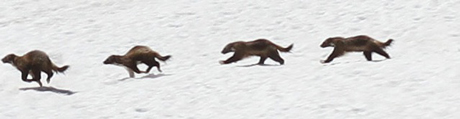
Swan View Coalition and others in July petitioned Montana to stop trapping wolverine, a candidate for listing under the Endangered Species Act.
Montana Department of Fish, Wildlife and Parks denied the petition.
Left with no other option, the same groups today filed a lawsuit to stop the trapping.
Montana is the only lower-48 state to still allow trapping of wolverine.
"We're lucky to see wolverine on rare occasions here in the Swan Range of northwest Montana, where they were first studied back in the 1970s, but trapping killed five times more wolverine than natural causes and killed nearly two-thirds of the wolverines being studied in just five years." said Keith Hammer, chairman of the Swan View Coalition. "Trapping must stop if these rare and wonderful animals are to return from the brink of extinction."
Read the Helena Independent article about the lawsuit here.
Read the full USA Today article about the petition here.
Read the lawsuit press release here.
Read the lawsuit complaint here.
Read the petition here to learn more about the habits, needs and threats to wolverine.

Motorcycles again this summer were captured in video and photos operating illegally off-trail near Lamoose Lake, as well as causing deep rutting of Alpine Trail #7 where their use is currently allowed.
Read on to see photos and video of this damaging activity and for a link to email your complaint to the Forest Service.
It's high time to get motorcycles out of the high alpine country along the Swan Crest!
(Read Full Article)

Thanks to folks like you, 97% of the comments received by the Flathead National Forest were opposed to felling the best larch trees just to collect the cones for nursery seed. Most suggested non-lethal alternatives such as climbing the trees or using helicopters and lift trucks to fetch the cones.
The Flathead has revised its proposal to consider the use of lift trucks, but it fails to require the use of lift trucks or other non-lethal methods! In fact, other non-lethal methods are not even discussed in the new proposal!
Your email comments on the new proposal are needed by July 7 to once again send a clear message to the Flathead that the public does not want the Forest Service killing the goose that laid the golden egg!
Please send an email today to Marsha Moore at comments-northern-flathead@fs.fed.us . Tell her you want non-lethal cone collection methods to be REQUIRED, and that they may include an array of options such as traditional tree climbing, lift trucks and helicopters. Killing our best larch trees, no matter how few or many, is simply not necessary!
You can read the June 5 revised cone collection proposal here.
You can read Swan View's comments on the revised proposal here.
You can read our alert on the Flathead's initial cone collection proposal here.

1. Bicycling is a great way for people to enjoy the outdoors and get healthy exercise.
2. Flathead National Forest has over 3,500 miles of road open to bicycling, with nearly 2,000 of those miles closed to motor vehicles but open to biking without the hassle of dust and traffic.
3. Bikers, hikers and horseback riders share many miles of "leave no trace" trail on the Flathead. This should not be a problem unless bikers insist on high speeds and/or leave behind unlawful jumps and ramps that are unsightly and increase risks to all trail users.
4. The pursuit of free-ride and other mountain bike speed sports should not occur on multiple use trails due to the potential for conflicts between bikers, other trail users, and wildlife. Big Mountain already has facilities for free-ride and high-speed mountain biking - and plans for more. We urge Flathead National Forest to redirect these activities there.
5. We encourage lower impact hiking instead of mountain biking in Inventoried Roadless Areas because they qualify for future designation as Wilderness (which does not allow biking) and provide some of the Forest's best and most secure wildlife habitat.
6. Bicycling can and should provide a healthy and safe link between our urban areas and public lands if everyone minds their manners, obeys the law, and all agencies pursue meaningful public planning.
Download these principles as a pdf.

Freeride mountain biking has become an increasingly popular sport in the Missoula area over the past decade or so. Advancements in suspension technology have allowed for bikes specifically tailored to more "technical" terrain: steep slopes, jumps, rock drops and log ramps. But Missoula's legal trail system doesn't have much of that. The void is filled by an outlaw culture of freeriders bent on meeting their own demands, even if it means breaking the law. . .
"Historically, the Forest Service has allowed sort of conventional uses: walking down the trail, taking your horse, driving your ATV on a road," [Lolo National Forest's Boyd] Hartwig explains. "The mountain bikers who want a more challenging experience, they've taken it to the next step and said, 'That's not enough for us. We want to construct things. We want to build jumps and bridges,' or whatever. That takes us outside the bounds of what we're allowed to do."
Read the full Missoula Independent article here.
The Winter-Spring 2012 issue of Swan View's News describes the interplay of science, litigation, politics, and collaboration in the restoration of the Big Creek watershed on the Flathead National Forest.
You'll want to read this issue cover-to-cover if you'd like to know why citizen advocacy and litigation are so often necessary to give voice to the needs of fish, wildlife and people!
Winter-Spring 2012 Swan View's News (pdf).


"The Montana Department of Environmental Quality and Flathead National Forest announced the news Thursday that Big Creek had been removed from the state's list of impaired waters. . .
Practices for reducing sediment . . . included decommissioning 60.6 miles of forest logging roads, removing 47 culverts and replacing 19, improving 89 miles of roads to decrease stormwater runoff; revegetating 25 acres of eroding uplands, and working with Montana Fish, Wildlife and Parks to improve the amount of large wood in headwater streams that feed Big Creek. . .
Road building and timber harvesting led to accelerated soil erosion and substantial increases in the amount of sediments delivered to Big Creek."
Read the full Daily Inter Lake article here.
Comments submitted by Swan View Coalition and Friends of the Wild Swan lay out the scientific basis for restoring fish and wildlife habitat in the Swan Valley by removing roads, not trees.
Read or download their letter and bibliography here.

"Two local conservation groups have filed a lawsuit against the U.S. Forest Service objecting to a logging project proposed in the South Fork Flathead River corridor, the second time in two months the groups have filed litigation against a South Fork logging proposal.
Friends of the Wild Swan and Swan View Coalition, represented by Helena's Western Environmental Law Center, filed a lawsuit on April 16 in U.S. District Court in Missoula in opposition to the Forest Service's Soldier Addition II Project on the west side of the South Fork near the Bob Marshall Wilderness Complex.
In late February, the two groups sued the Forest Service over the Spotted Bear River Project, a logging proposal on the opposite side of the South Fork Flathead River. Both projects are located in the Spotted Bear Ranger District of the Flathead National Forest."
Read the full Flathead Beacon news article here.
The two logging projects are in areas connecting the Great Bear and Bob Marshall Wilderness areas to each other and to the Swan Range west of the South Fork Flathead River, corridor areas critical to wildlife that can't swim across the 23,000 acre Hungry Horse Reservoir!
We supported past timber sales that removed trees closer to Spotted Bear buildings and closed roads to protect wildlife, but these huge sales will reopen roads and log critical habitat far from human habitations!
"With 23,000 acres of habitat flooded by Hungry Horse Reservoir, the Spotted Bear and Bunker Creek areas are critical habitat connectors between the Great Bear Wilderness, Bob Marshall Wilderness, and northern Swan Range," said Swan View Coalition Chair Keith Hammer. "Elk and other wildlife can't afford to have their critical habitat damaged by more roads and logging."
Read about 61% of Flathead Beacon readers supporting our lawsuits here!
Page: ←12345678910111213141516171819→